What Is a Letter of Guarantee (LoG) in Crypto Swaps?
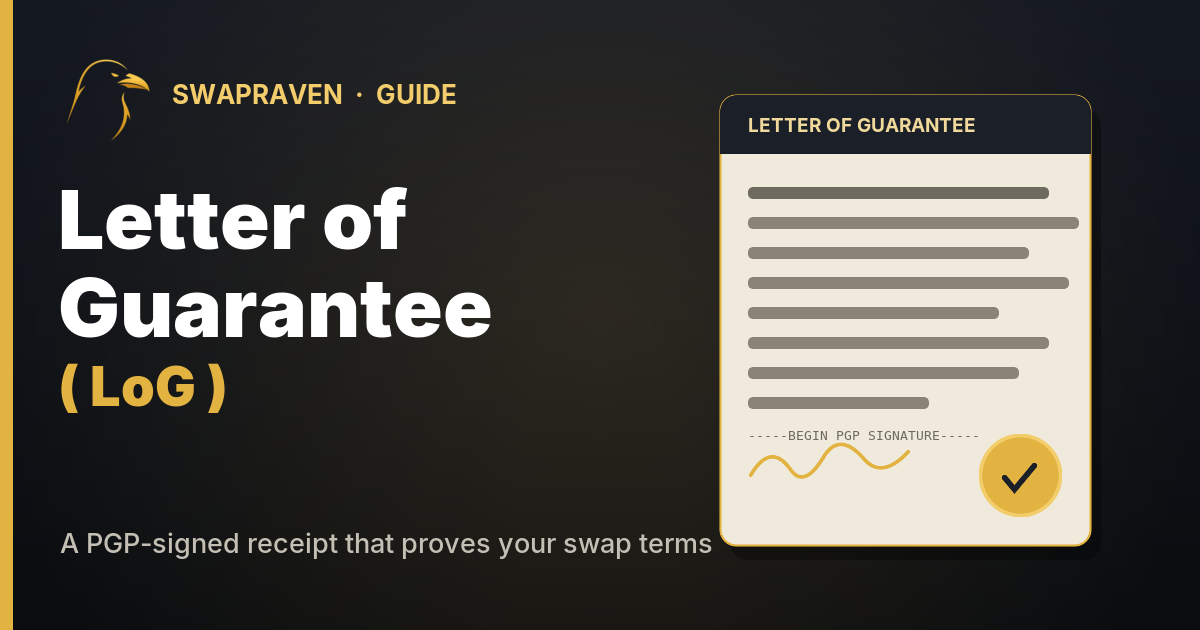
A Letter of Guarantee (LoG) is a PGP-signed proof an exchange received your deposit and where your coins must go — what it is, how to verify it, and why it matters in disputes.
Read more →News, guides and updates on instant-swap exchanges, privacy and the directory.

A Letter of Guarantee (LoG) is a PGP-signed proof an exchange received your deposit and where your coins must go — what it is, how to verify it, and why it matters in disputes.
Read more →
After the Coldcard scare, here's how to store crypto safely: every storage option compared, why your seed (not the device) is what matters, multisig and metal backups, a multi-wallet strategy, and how to swap into self-custody.
Read more →
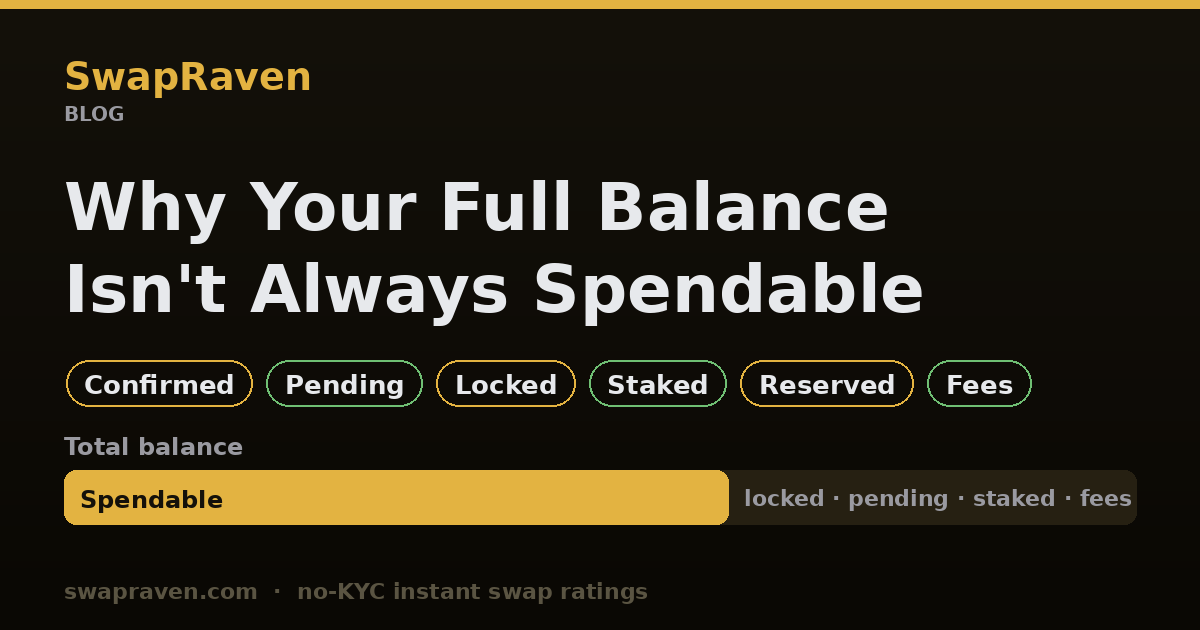
Your total crypto balance isn't always spendable. Learn how confirmed, pending, locked, staked and reserved funds — plus gas fees and how wallets work — affect sending coins and doing instant swaps.
Read more →
Address poisoning tricks you into sending crypto to a lookalike address copied from your own transaction history. Learn how the scam works — zero-value transfers, dust, and fake tokens — and the habits that make you immune.
Read more →
How crypto mining works and how people earn coins like Bitcoin, Dogecoin, and Monero (and stake ETH) — then convert what they earn into USDT, USDC, Monero, or anything else with no-KYC instant swaps, all in self-custody. A full earn-and-convert pipeline.
Read more →
What a Bitcoin wallet address is and how to get one: what it looks like, the different address types (legacy 1…, P2SH 3…, native SegWit bc1q…, Taproot bc1p…), and step by step how to use your Bitcoin address to receive coins from an instant swap.
Read more →
The best Bitcoin wallets for instant swaps and all the settings that matter: Sparrow, BlueWallet, Electrum and hardware wallets, address types, fee control and RBF, coin control — and why you should display amounts in BTC (not mBTC/millibits) and double-check the units before swapping.
Read more →
A step-by-step guide to using an instant swap exchange: choosing the pair, fixed vs floating rates, your receiving and refund addresses, confirmation times, and privacy best practices like fresh self-custody wallets and Tor.
Read more →
The best Ethereum wallets for instant swaps and why some are better: Rabby, MetaMask, Frame, and hardware wallets, why you need a self-custody wallet, and the gas, nonce, and security settings that matter when you swap into ETH.
Read more →
Public and private keys in crypto explained completely: what they are, where they come from, the logic of signing and verification, how seed phrases differ from private keys (and what the words mean), how it applies across Bitcoin, Ethereum, Solana, and Monero, and how to secure your private key.
Read more →
The best Monero wallets and how to choose one: what they do, the node question (your own local node, your own remote node, or a trusted remote node), the privacy issues, which wallets (Monero GUI, Feather, Cake, Monerujo) are best for instant swaps, and best practices.
Read more →
What Solana is, the purpose it solves (fast, cheap transactions), and what else it can do (DeFi, NFTs, memecoins, stablecoins) — plus how to get SOL with no-KYC instant swaps from Bitcoin, Monero, and Ethereum, and how to do it privately by routing through Monero.
Read more →
How to get Dogecoin with no-KYC instant swaps from Monero, Bitcoin, Ethereum, Litecoin and more (and swap back out): Dogecoin's history as the original memecoin, its no-cap inflationary token supply, how the network works, and the benefits of getting DOGE through an instant swap into your own wallet.
Read more →
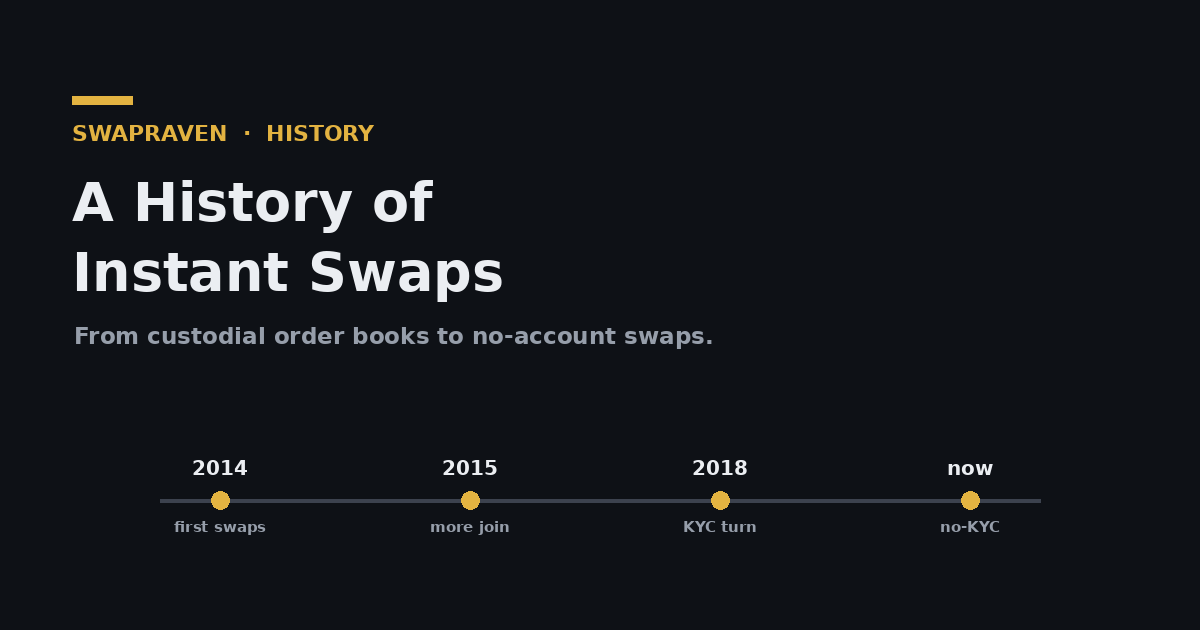
When did instant swaps start? The history of the no-account, address-based crypto swap — from custodial order books to ShapeShift in 2014, the KYC turn, aggregators, privacy coins, and today's no-KYC instant swaps.
Read more →
The hardware and operating system to use for private crypto swaps: dedicated devices, privacy laptops like NovaCustom (which accepts Monero and ships to a mailbox), the best privacy operating systems (Tails and Qubes OS), and how to treat your setup to stay isolated and private.
Read more →
BNB and BNB Chain explained: what the network is, its Proof of Staked Authority model, the stablecoins and memecoins on it, what it's good and bad at, and how to get onto BNB Chain (BEP-20) privately from Bitcoin, Ethereum, or Monero using a no-KYC instant swap on SwapRaven.
Read more →
How to get memecoins on-chain with instant swaps and DEXs — and how to do it privately by routing through Monero into a fresh wallet for the native gas coin (ETH, SOL, BNB, TON) first, so your memecoin hunting can't be traced or copied. Why wallets are monitored and how to pre-fund privately.
Read more →
How blockchains reach consensus and stay secure: Proof of Work, Proof of Stake, Delegated PoS, Proof of History, Proof of Authority and more — how each works, why some are faster or slower and more or less secure, and the risks and concerns of each.
Read more →
What Bitcoin maximalism is and where it came from: the origin of the term, why it matters to people (sound money, 21M cap, decentralization, self-custody), the habit of pricing everything in Bitcoin and sats, the culture, and the prominent voices who hold this mindset.
Read more →
What a nonce is in crypto: the meaning of 'number used once', the mining nonce in proof-of-work, the account/transaction nonce in Ethereum (and how it causes stuck transactions), cryptographic and authentication nonces, and how nonces secure and order everything on a blockchain.
Read more →
How to look up your crypto transactions and wallet on the blockchain with block explorers — links for Bitcoin, Ethereum, Litecoin, Solana, Tron, TON and more, how to track where coins went to and from by TXID or address, and why Monero and shielded Zcash can't be traced unless a view key is exposed.
Read more →
How to move larger amounts through no-KYC instant swaps with privacy: why certain amounts get flagged, spreading activity sensibly and legitimately, using different wallets, checking an exchange's AML/KYC policy first, and why exchanges with their own liquidity give more freedom than those sourcing liquidity from CEXs.
Read more →
Underpayments, overpayments, and late payments in instant swaps explained: why they happen (fees deducted from the amount, send-max, low fees, expired quotes), how to avoid them, why you should always set a refund address, and how to contact support with your order ID and TXID when one occurs.
Read more →
What a crypto dusting attack is and how exchanges and analytics firms use tiny dust payments to track and deanonymize you, how to deal with it (don't spend it, freeze the UTXO, coin control, fresh addresses), and why swapping into Monero is the strongest way to protect your privacy.
Read more →
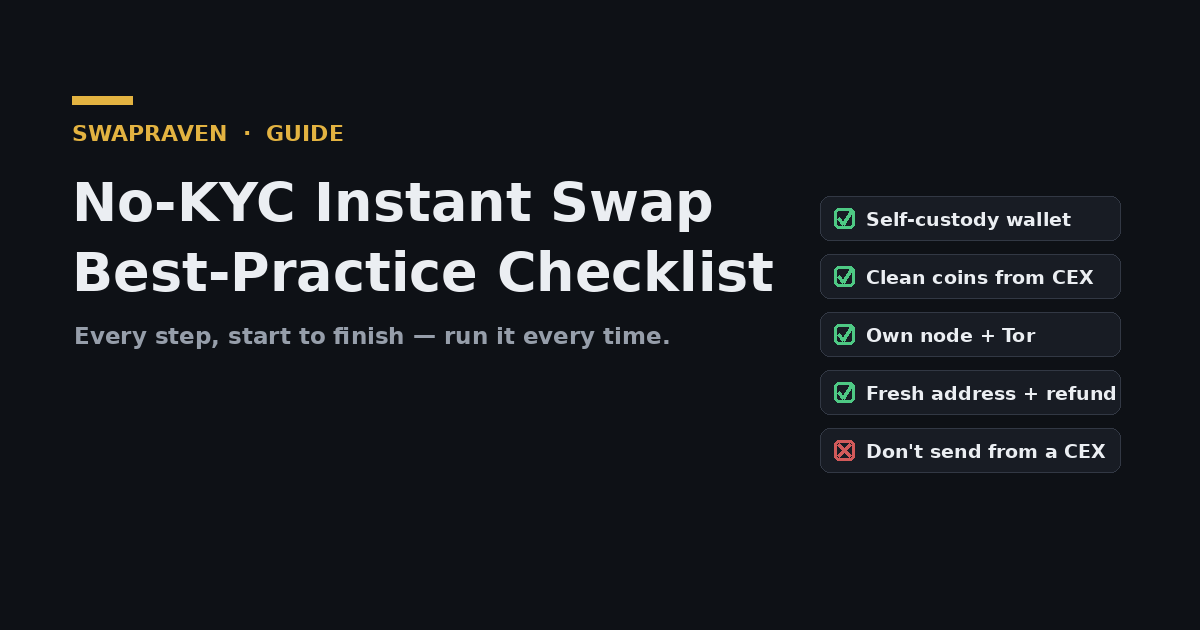
A complete no-KYC instant swap checklist and best practices — every step from setup and clean coins to the swap and privacy hygiene afterward, plus the mistakes to avoid (like sending straight from a CEX).
Read more →
How to swap into and out of stablecoins with no-KYC instant swaps: USDT (and USDC, DAI), USDT on TON, Tron, and Ethereum, swapping to and from Monero, how stablecoins lock in gains, the freeze and depeg risks versus Bitcoin, Ethereum, and Monero, and a strategy for using them on SwapRaven.
Read more →
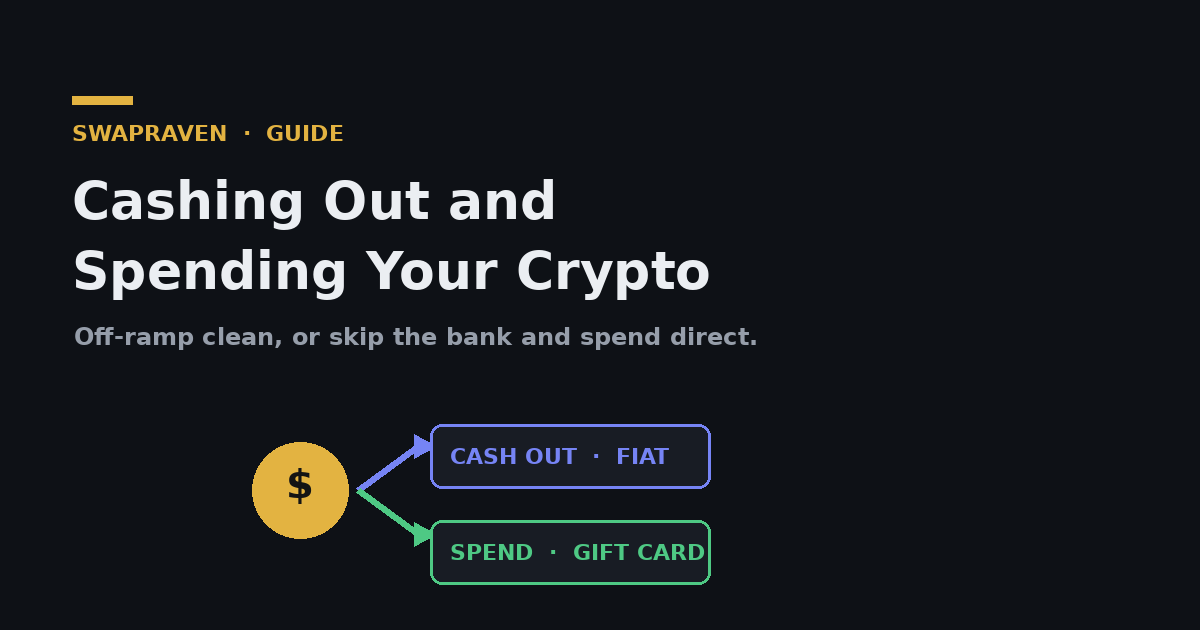
How to cash out instant-swap profits cleanly through KYC exchanges (what to do and avoid), or skip the bank and spend crypto directly — gift and prepaid cards, travel, VPNs, and merchant directories like Monerica and kycnot.me.
Read more →
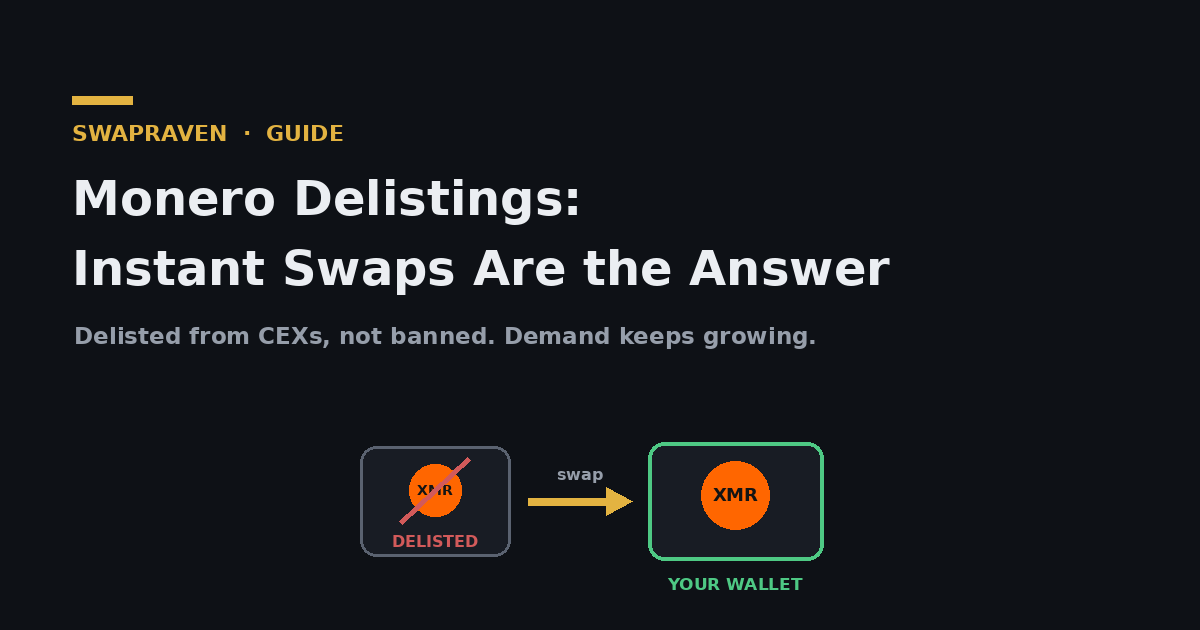
Binance, Kraken, OKX and others delisted Monero under privacy-coin regulation — but it's legal to own and demand keeps growing. No-KYC instant swaps are now the simplest way to get XMR. Here's why, and how.
Read more →
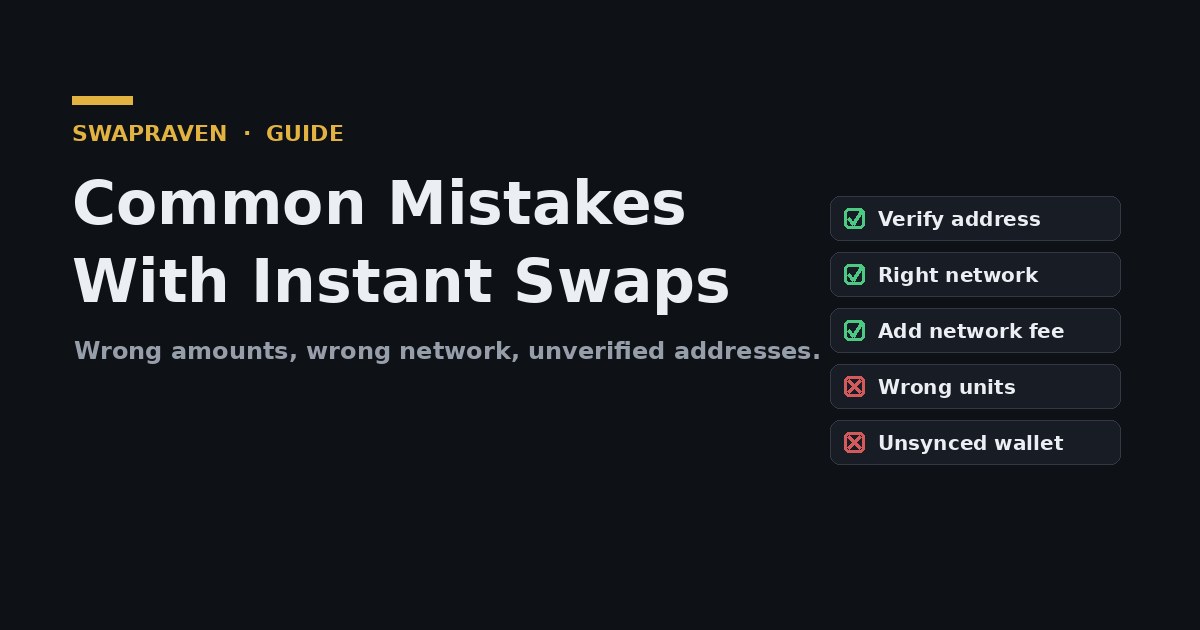
Avoid the mistakes that ruin instant swaps: wrong units (mBTC vs BTC), forgetting network fees, unsynced wallets, wrong networks, missing memos, unverified addresses, and floating-rate timing. A pre-send checklist to get it right.
Read more →
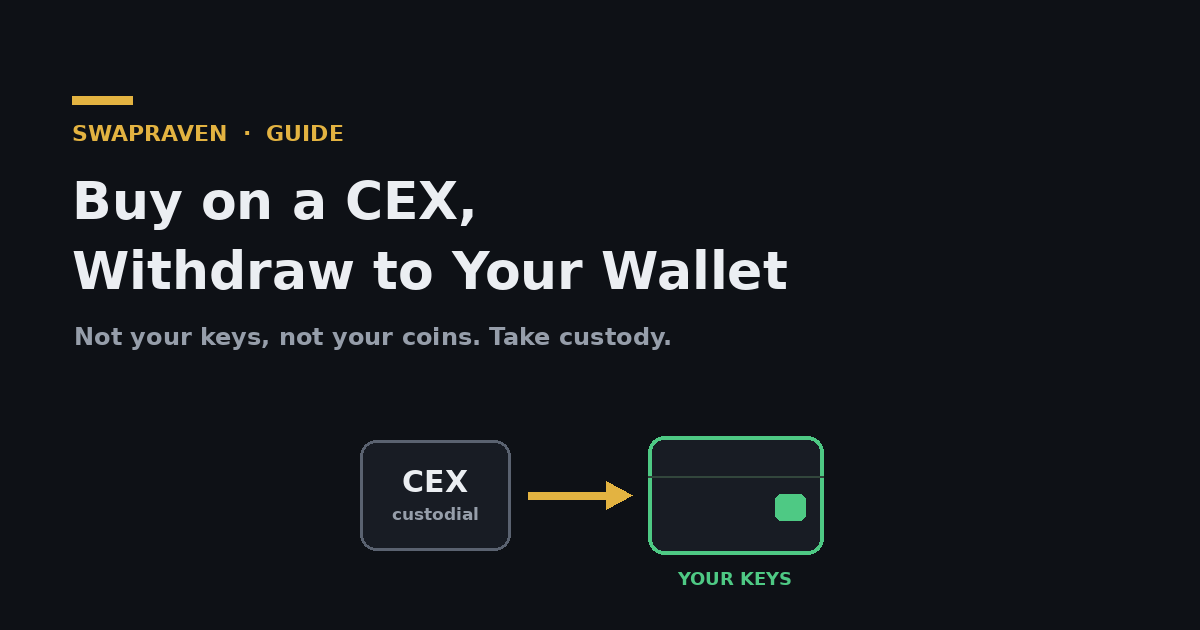
Buy Bitcoin or Ethereum on Coinbase or Kraken, then withdraw to a wallet you control — because not your keys, not your coins. Take self-custody, then use no-KYC instant swaps to reach any coin you want.
Read more →
Crypto sends are irreversible — how to verify a deposit or withdrawal address every time: checking first and last characters, the network, clipboard hijacking and address poisoning, and how to still verify a wallet address when you scan a QR code so you don't fall for a swapped-address scam.
Read more →
What an instant swap exchange monitoring site is, the different kinds (rate monitors, aggregators, no-KYC directories), why so many are full of low-quality or dead listings and pay-to-win rankings, what to look for, and how SwapRaven's trust grades, KYC/AML and privacy signals, and live rates make it better.
Read more →
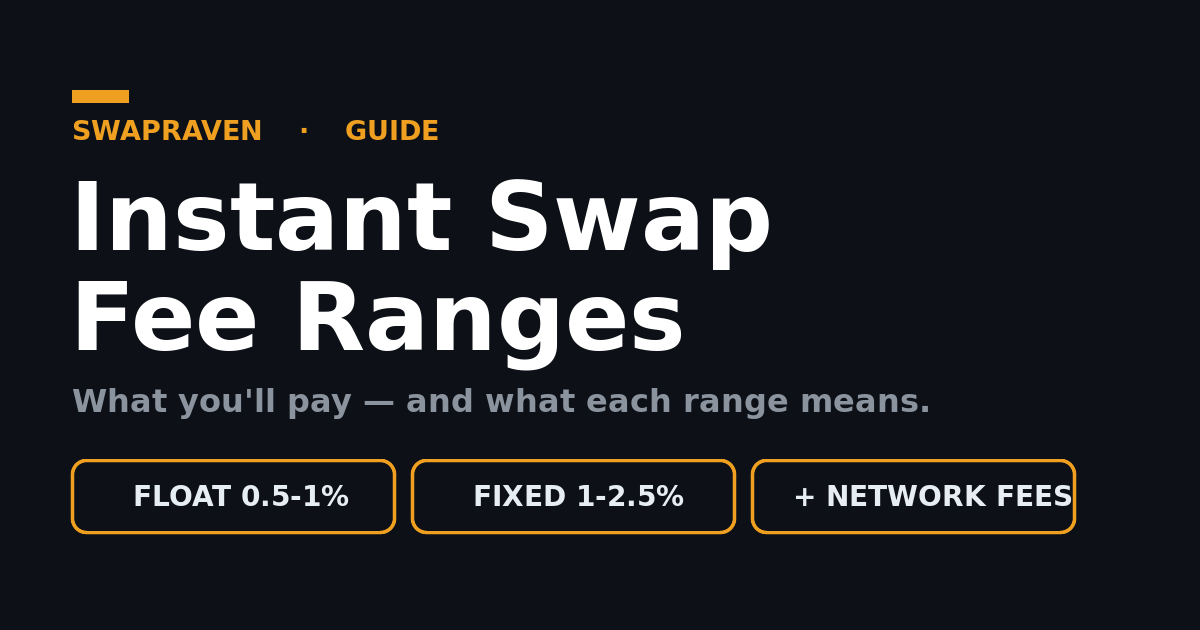
Typical instant swap fee ranges explained: how swaps charge via the spread plus network fees, what under 0.5%, 0.5–1% floating, and 1–2.5% fixed actually mean, why small or exotic swaps cost more, and what to realistically expect.
Read more →How JavaScript powers online tracking and why it matters for swaps: fingerprinting, third-party trackers, and attack surface, the settings to use (NoScript, uBlock Origin, Tor's security slider), the best privacy browser, and how SwapRaven's JavaScript-requirement grade helps you pick JS-light exchanges.
Read more →
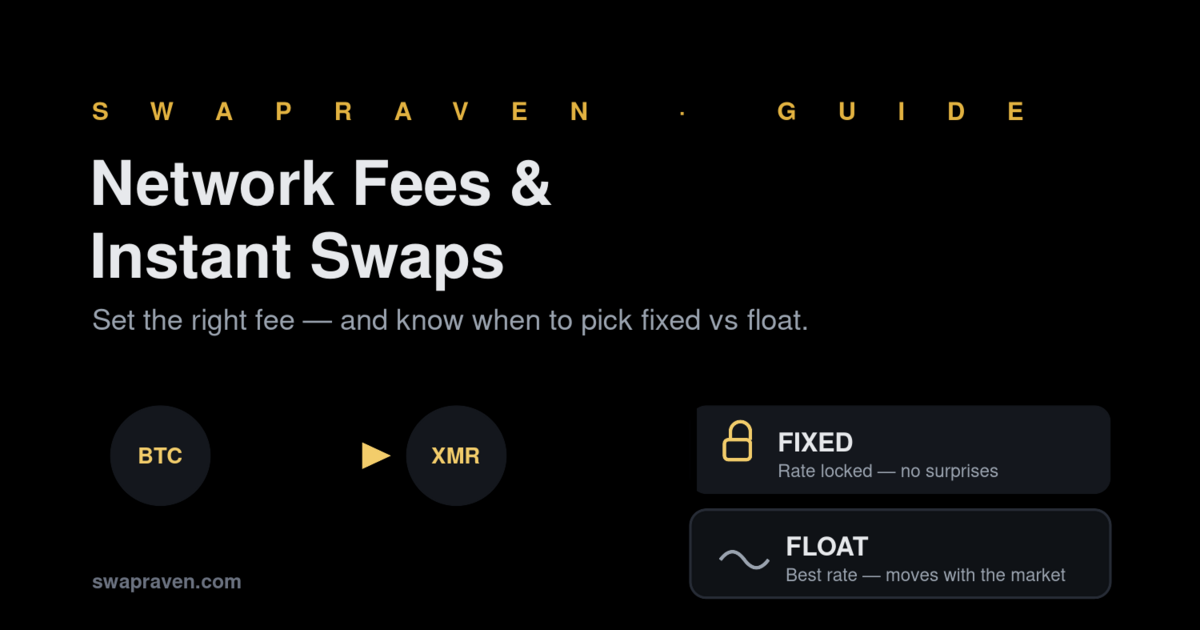
How Bitcoin and other network fees make or break an instant swap — why a low fee costs you hours, how it interacts with fixed vs. floating rates, when to use each, and how to avoid draining your wallet to zero.
Read more →
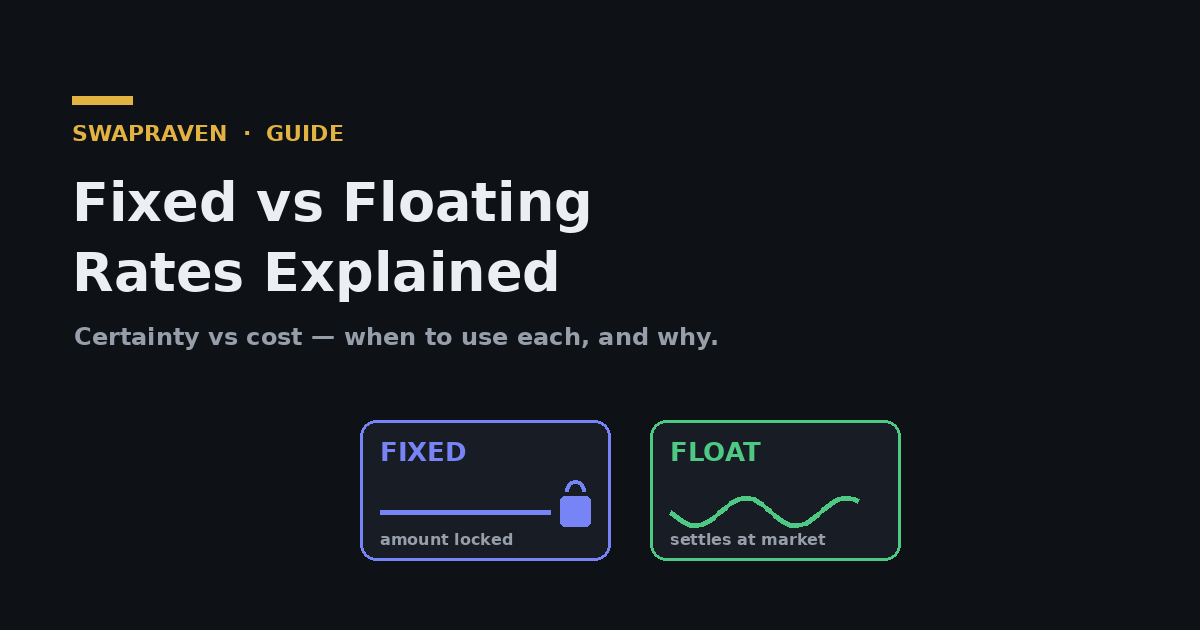
Fixed vs floating rates on instant swaps: what each does, why it matters, and when to use which. Fixed locks the amount (best for payments and volatile or slow swaps); floating is cheaper for routine self-swaps.
Read more →
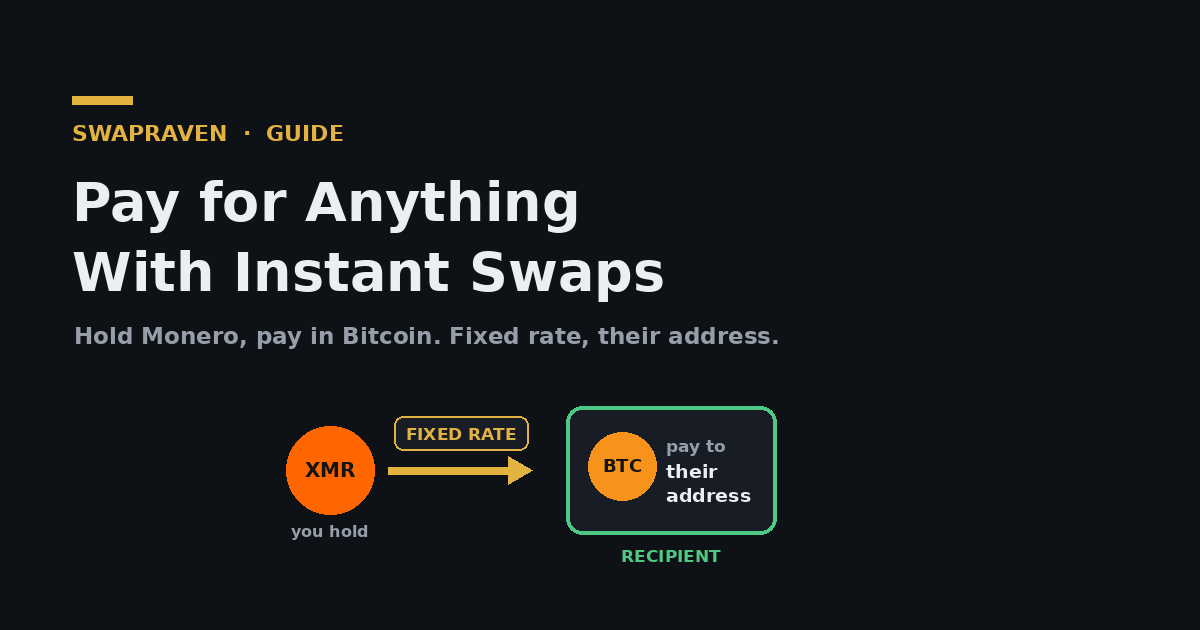
Pay someone in a coin you don't hold: enter their address as the swap's receiving address, choose a fixed rate to lock the exact amount, and the swap pays them directly. Pay any invoice in any crypto from what you already have.
Read more →
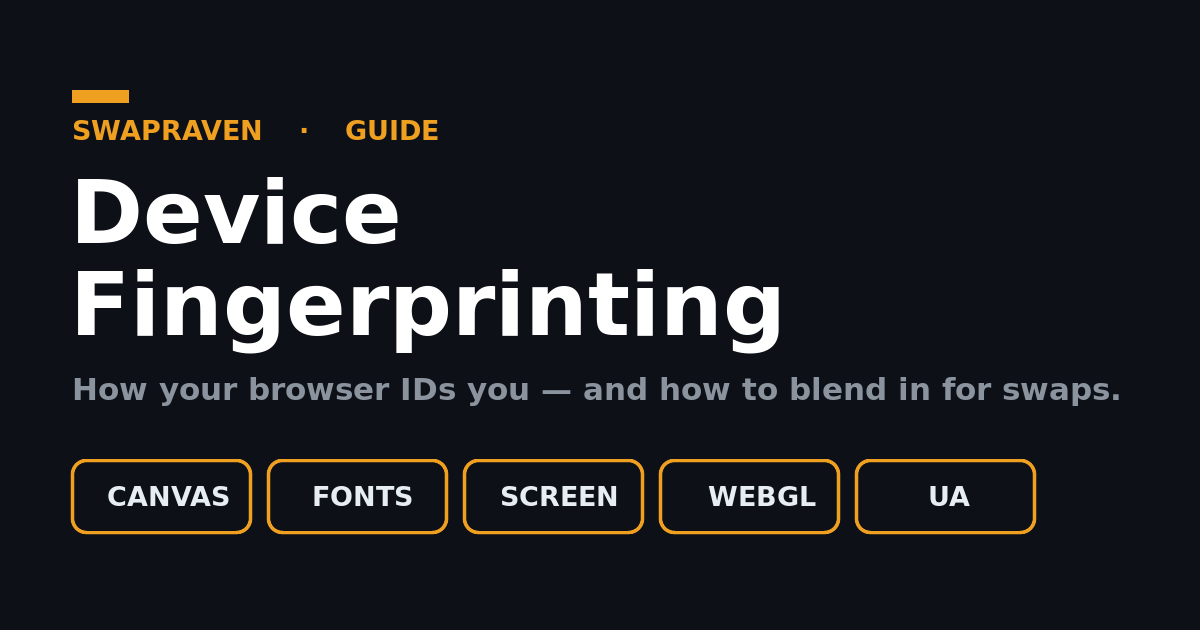
Device and browser fingerprinting explained: how sites identify you beyond your IP (canvas, WebGL, fonts, screen, user-agent), why it matters for private swaps, the best browser for maximum privacy (Tor Browser, Mullvad, Brave), and what not to do.
Read more →
Self-custody means you hold the keys — the freedom of crypto, and the responsibility. How to do it right: storing your seed phrase and passphrase, cold vs hot wallets, multisig, and best practices, because there's no third party to bail you out.
Read more →
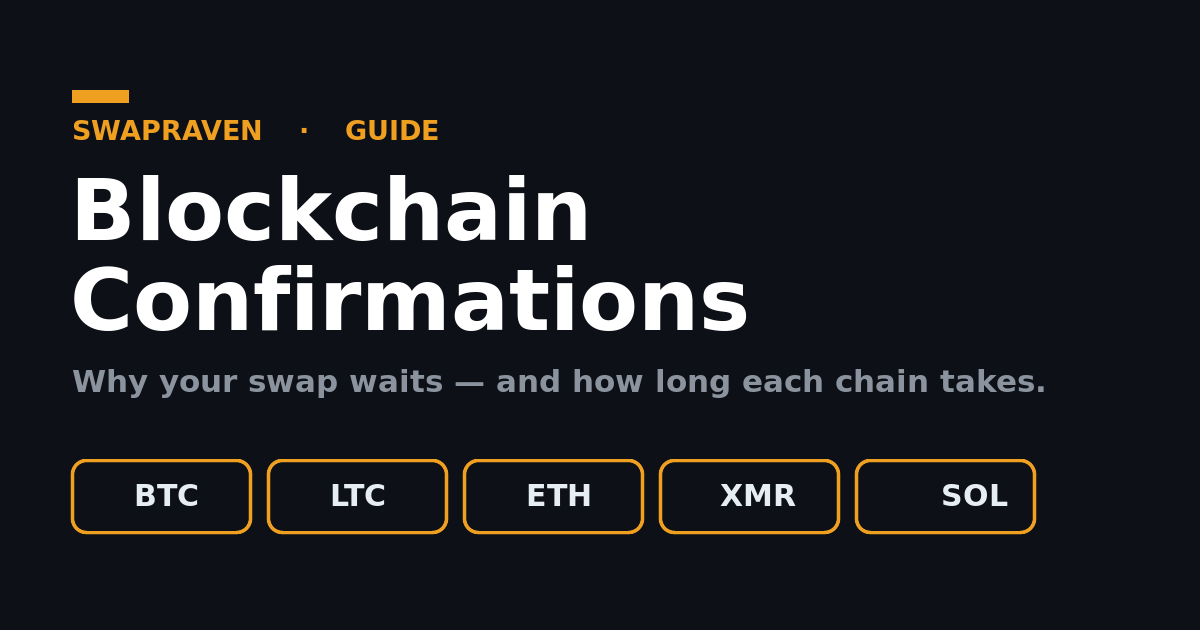
Why an instant swap can't start until your deposit gets enough blockchain confirmations: what confirmations are, how many each network needs, average confirmation times for Bitcoin, Litecoin, Ethereum, Monero, and Solana, and how to get your swap processed quickly.
Read more →
Tor vs VPN for crypto swaps: why hiding your IP matters, how Tor and VPNs differ, when to use each (and when not to), what to do and avoid, and best practices for keeping a no-KYC instant swap private.
Read more →
Bitcoin Lightning swaps explained: how the Lightning Network differs from on-chain BTC, why swaps use invoices instead of addresses, what makes it work (channels, HTLCs, BOLT11 invoices), which Lightning wallet you need, and step-by-step how to do a Lightning swap on SwapRaven.
Read more →
Uniswap vs instant swap exchanges compared: how an on-chain DEX and a cross-chain instant swap are similar and different, custody and fees, and when to use each — with examples like ETH→USDC on Uniswap vs ETH→native BTC or BTC→Monero on an instant swap.
Read more →
A swap can be technically private and still readable, because habits have a shape. How repeated timing, sizes, sources, and behavior leak privacy on a public chain — and how to break the pattern.
Read more →
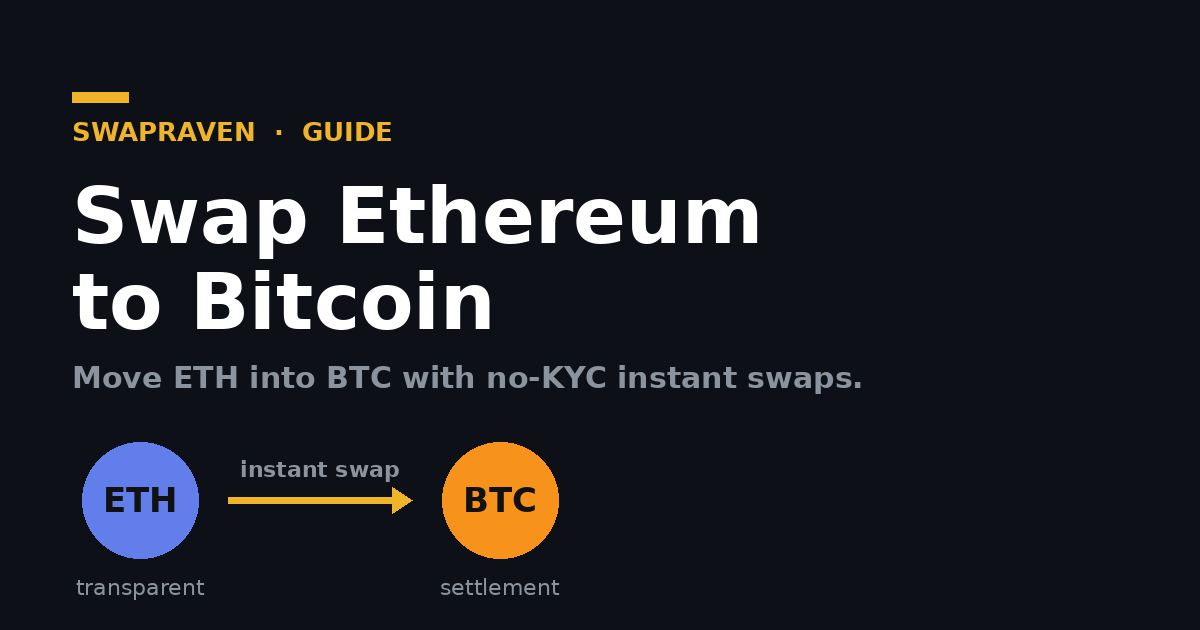
Swap Ethereum to Bitcoin with a no-KYC instant swap: how ETH and BTC differ and work together, setting up a new wallet, timing and gas issues, checking funds on block explorers, staying safe, and finding an ETH/BTC pair on SwapRaven.
Read more →
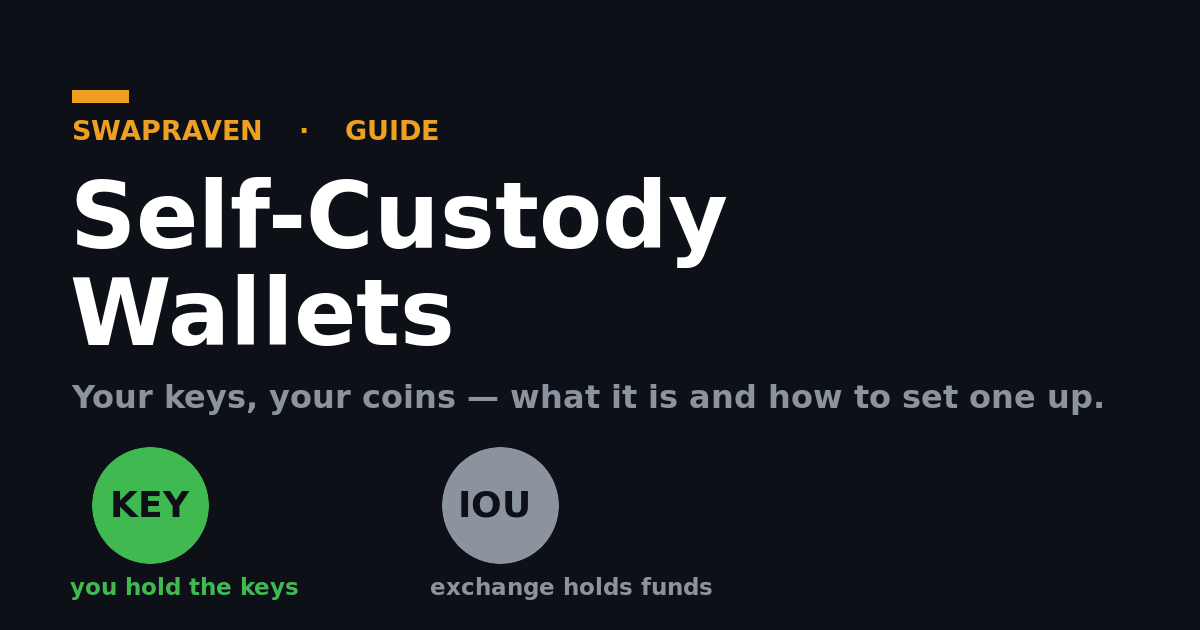
What a self-custody wallet is and how it works: private keys, seed phrases and addresses, how it differs from an exchange that holds your funds (custodial IOUs), why holding your own keys matters, and a step-by-step guide to setting one up.
Read more →
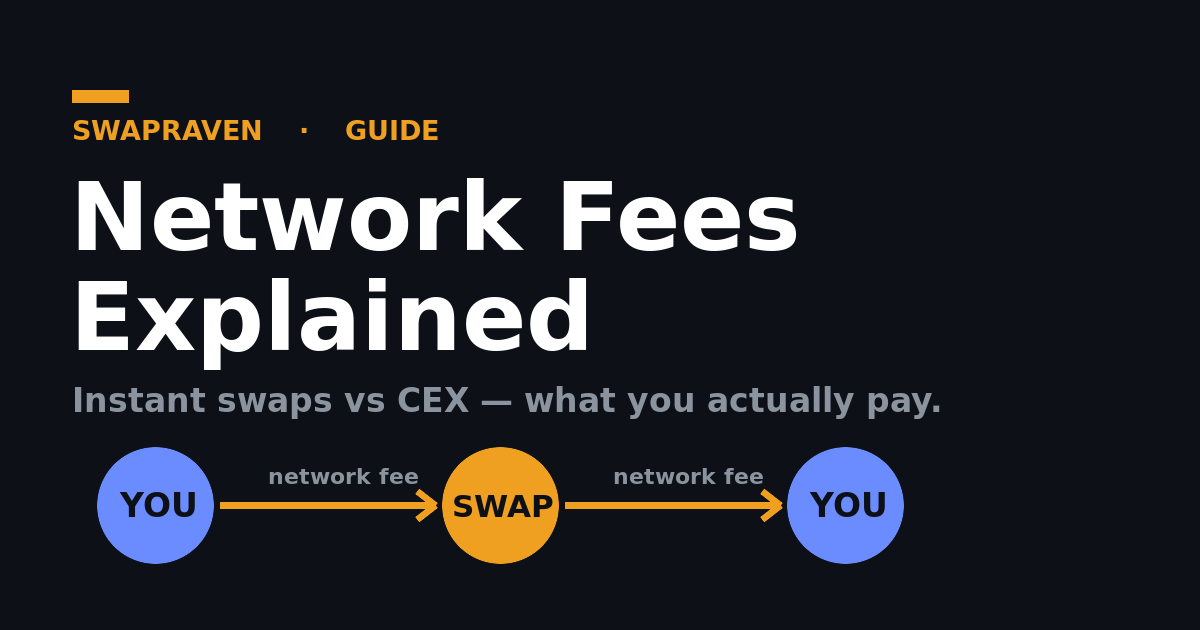
Crypto network (gas) fees explained: how the blockchain transaction model works, why every swap pays two network fees, how instant swaps differ from CEX withdrawal fees, and exactly what network fee to pay for a Bitcoin, Ethereum, or Solana instant swap.
Read more →
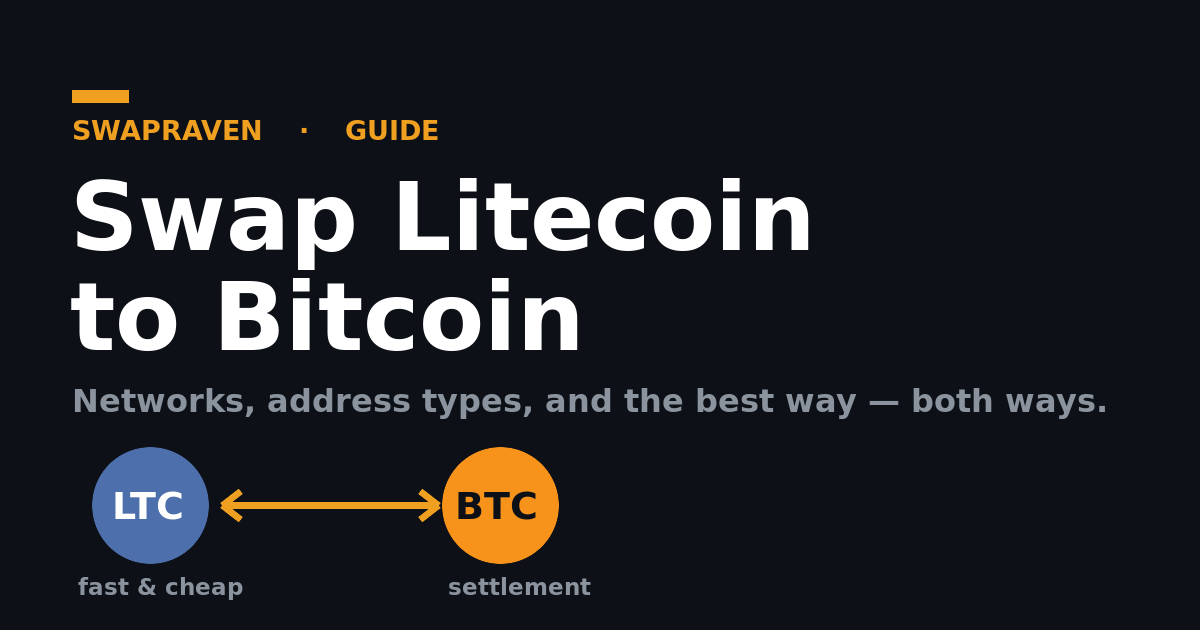
Swap Litecoin to Bitcoin (and BTC back to LTC) with a no-KYC instant swap: how the LTC and BTC networks differ, every address type (legacy, P2SH, native SegWit, and Litecoin MWEB), the modes to know, confirmations, and the best way to do an LTC/BTC swap on SwapRaven.
Read more →
Swap Solana to Bitcoin (and BTC back to SOL) with a no-KYC instant swap: how SOL and BTC differ and work together, setting up wallets, Solana fees and congestion, checking funds on block explorers, doing it in both directions, staying safe, and finding a SOL/BTC pair on SwapRaven.
Read more →
There's no single best crypto swap exchange — the best one depends on your priorities. A breakdown of every criterion (trust, KYC/AML, fees, coin support, speed, privacy, limits) and how to use SwapRaven's grades and filters to find the right no-KYC instant swap exchange for you.
Read more →
The best self-custody wallets for instant swaps across Bitcoin, Ethereum, Solana, TON, Tron, Zcash and Monero — including the Monero GUI for running your own node, plus seed-phrase safety and why a fresh address per swap matters.
Read more →
Peer-to-peer decentralized swaps (RetoSwap, Bisq, Haveno) vs instant swap exchanges: a comparison of trading pairs, rates and safety — and why instant swaps suit most traders despite the merits of P2P.
Read more →
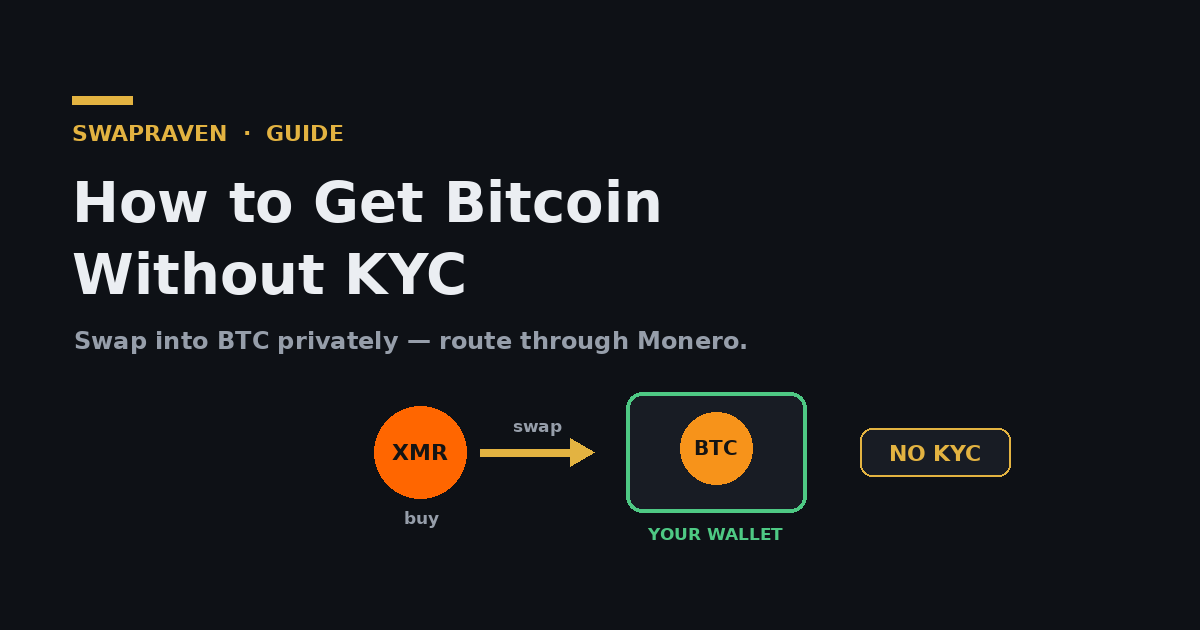
Get Bitcoin with no account and no KYC using instant swaps. Learn several methods — including the privacy-maximizing route of buying Monero, withdrawing to your wallet, and swapping XMR to BTC so your Bitcoin isn't tied to your ID.
Read more →
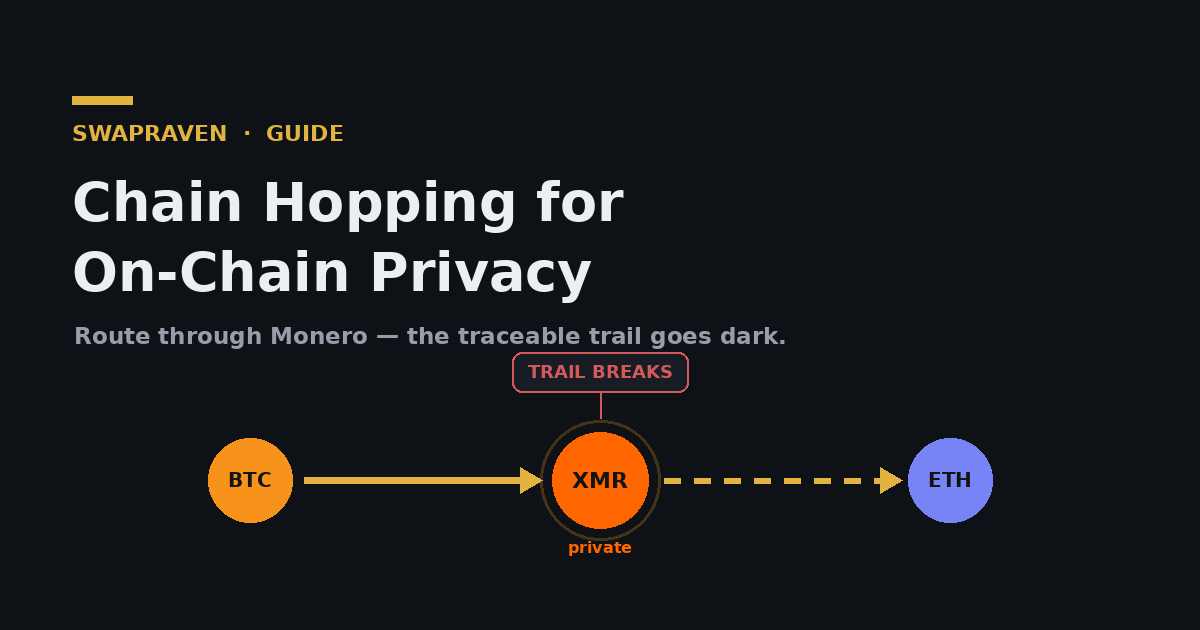
Cross-chain swaps (chain hopping) break the traceable trail on public blockchains — especially when you route through a privacy coin like Monero. How it protects privacy, the metadata limits, and why a privacy coin sets your money free.
Read more →
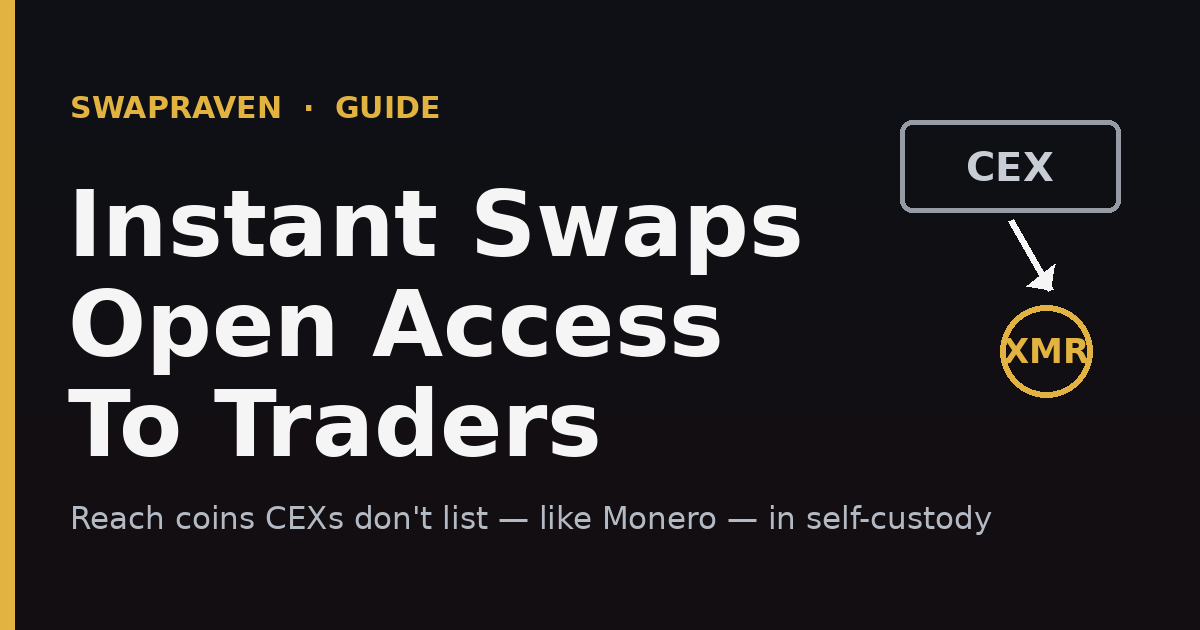
Instant swaps let traders reach coins centralized exchanges don't list — including privacy coins like Monero. Withdraw BTC or ETH from a CEX and swap it into your own private wallet.
Read more →
No-KYC crypto exchanges are gaining traction: control over your funds, low overhead, and clear send/receive amounts. SwapRaven helps you find exchanges by their real KYC policy.
Read more →
Centralized exchange KYC turns your identity into a honeypot. Leaked KYC data has fueled phishing, extortion and even physical attacks. Here's why instant swaps are the safer way to trade.
Read more →
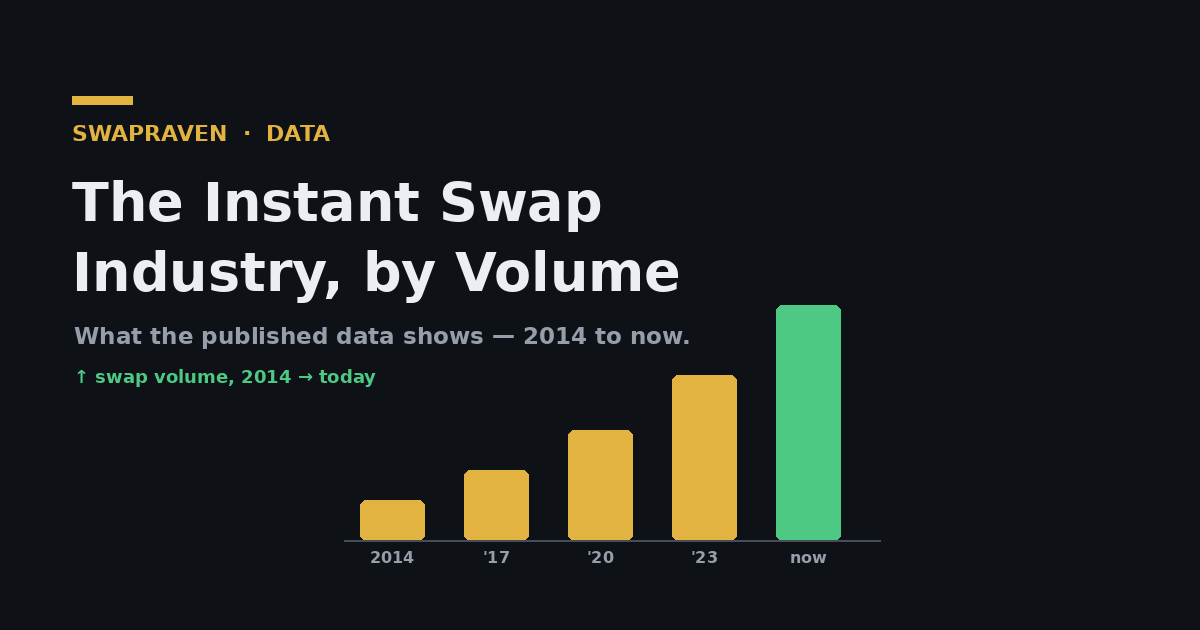
How much moves through instant swap exchanges? A data-backed look at instant-swap and on-chain swap volume since 2014 — ShapeShift's early figures, Uniswap's $4T cumulative, THORChain's $100B+ cross-chain swaps — with sources, plus speculation on the unpublished no-KYC segment.
Read more →
Monero (XMR) keeps getting delisted from big exchanges. Instant swaps are the easiest way to get Monero — no account, no KYC by default — and most support XMR. Here are the ways to do it.
Read more →
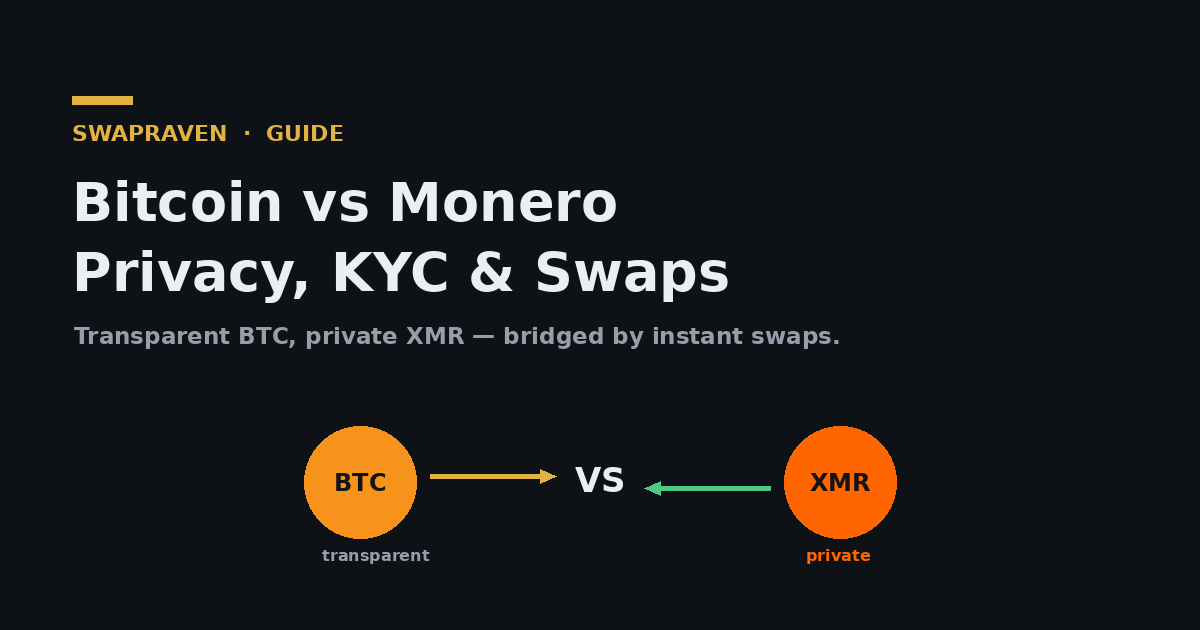
Bitcoin vs Monero on privacy and KYC — transparent BTC vs private-by-default XMR. Why BTC/XMR is a popular instant-swap pair, and a step-by-step, privacy-first guide to converting between them (and why never to swap straight from a CEX).
Read more →
Stay no-KYC by never tripping an exchange's AML system. Learn the two biggest triggers — structuring and tainted coins — how to check coins with an AML checker, and best practices to avoid getting flagged.
Read more →
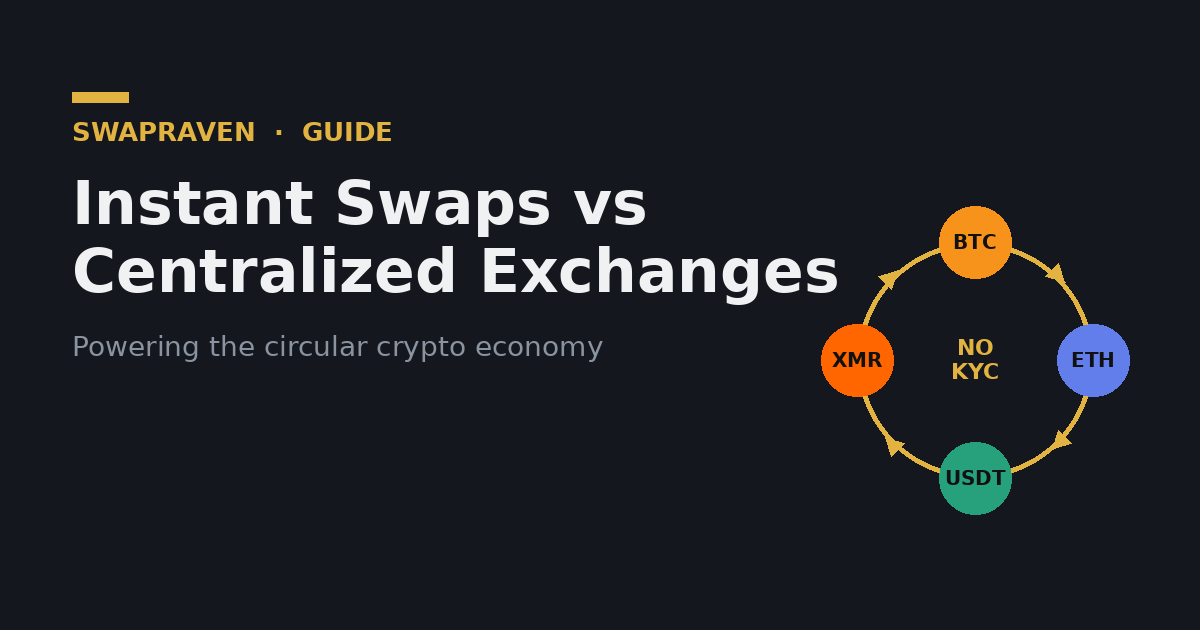
Why use a no-KYC instant swap instead of a centralized exchange — self-custody, no identity honeypot, and reach to any coin — and how address-based crypto-to-crypto swaps keep value circulating inside a circular crypto economy.
Read more →
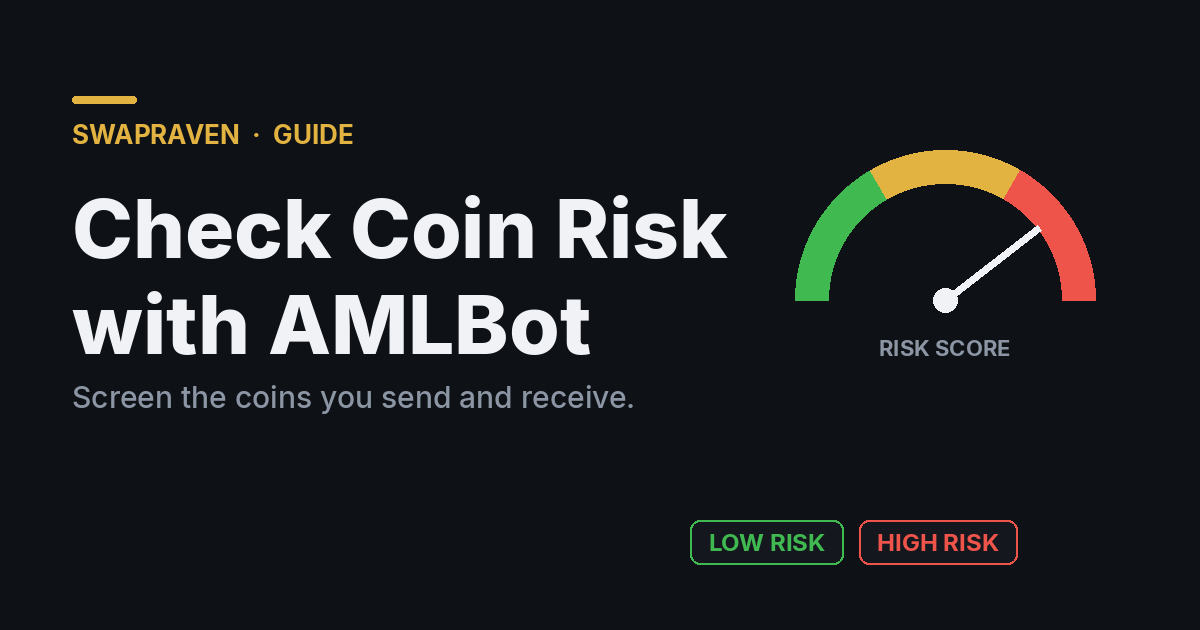
Screen the coins you send and receive with AMLBot and other AML/risk checkers: how risk scores and the 0–25 / 25–75 / 75%+ risk bands work, what percentage of tainted funds gets you flagged by category, what happens if you deposit flagged coins to a CEX, and exactly what to do when coins come back high-risk.
Read more →
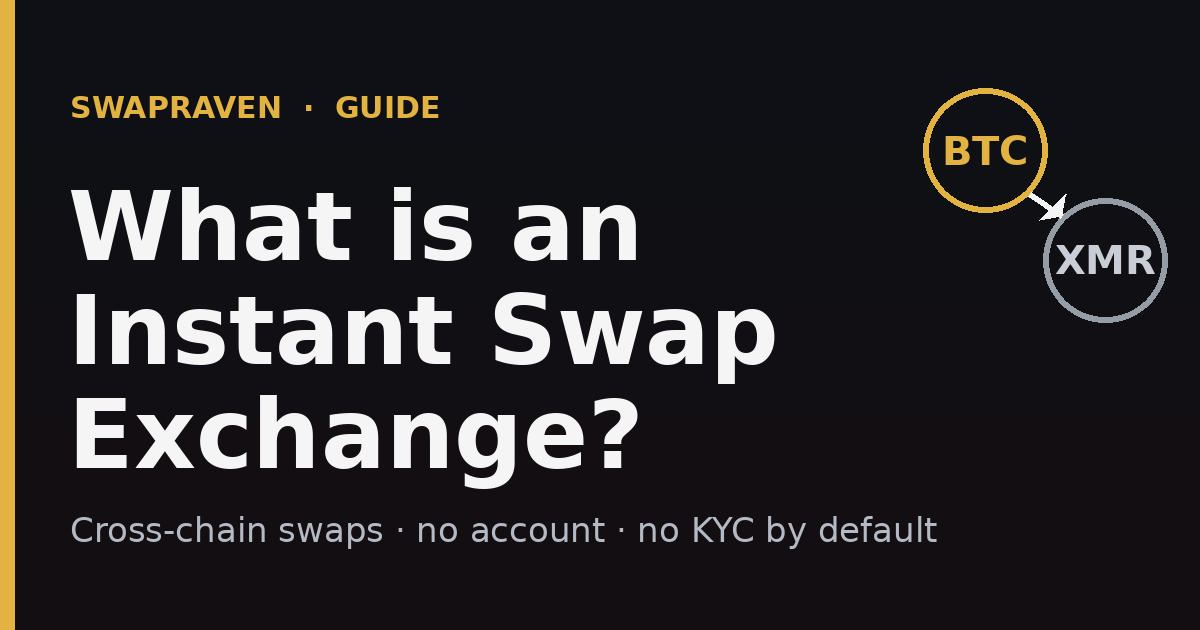
Instant swap exchanges let you trade crypto cross-chain in minutes with no account and no KYC by default. See how they work and how they compare to CEX and DEX exchanges.
Read more →